The Transformation
The transformation of the family room came not from major structural changes, but from thoughtful design decisions that reshaped the visual balance of the space.
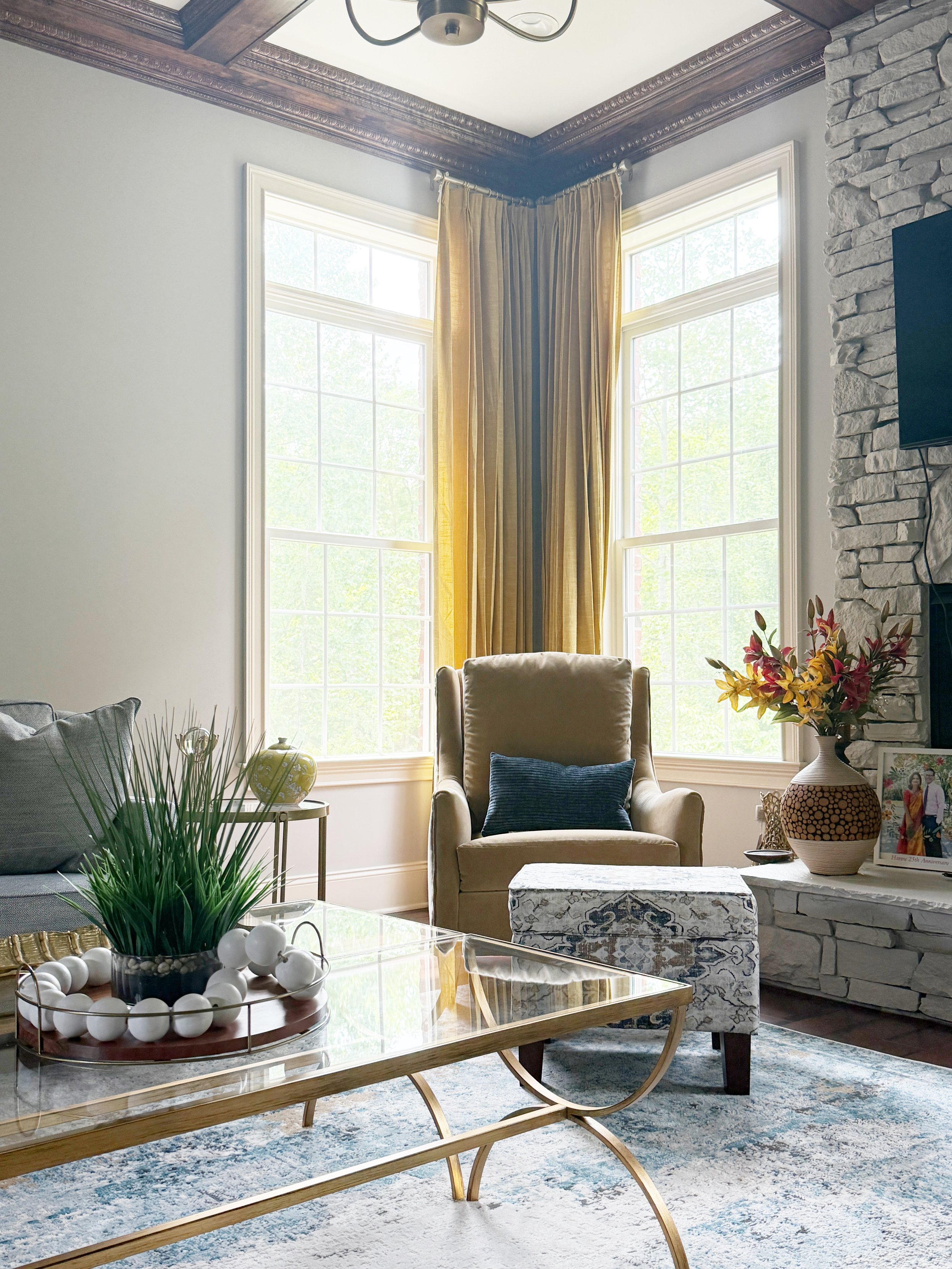
A soft, light-toned rug now anchors the seating area, helping to lighten the room while grounding the furniture arrangement. Patterned sofas, a velvet navy settee, and two graceful gold-accent chairs create a layered seating arrangement that feels both refined and comfortable.
Patterned stools add versatility to the space, serving as footrests or extra seating when guests gather. Each piece was chosen to contribute to the overall composition without overwhelming the room.
To emphasize the height and beauty of the coffered ceiling, long drapery panels were added and positioned strategically to soften the architecture and guide the eye upward. This simple addition helped balance the room’s proportions while adding softness and elegance.
A statement chandelier with a subtle presence completes the room, adding just enough visual interest without competing with the ceiling’s intricate detailing.
The Result
What once felt dark and visually heavy now feels balanced, bright, and welcoming.
By allowing the home’s architectural features to guide the design and introducing a palette that brought lightness to the room, the family room has become the heart of the home, a space that feels relaxed, refined, and designed for everyday living.
It is now a place where the family can gather comfortably, whether enjoying quiet mornings together or spending long evenings filled with conversation, laughter, and board games.
More importantly, the space finally reflects how the homeowners wanted their home to feel: warm, inviting, and effortlessly connected to the life they live within it.
Does Your Home Need A Refresh?
If you walk into your living room and feel like something is off but cannot quite put your finger on what, you are not alone. Most of the families I work with are not starting from scratch. They have a home with good bones, real character, and features worth celebrating. What they need is someone to help them see it clearly and make a plan that brings it all together.
That is exactly what a Signature Design Session is for.
In one focused conversation, we look at your space with fresh eyes. We talk about what is working, what is weighing the room down, and what a realistic path forward looks like for your home and your life. You leave with clarity, direction, and a design approach that is specific to you.
No overwhelm. No conflicting opinions. Just a clear vision for a home that finally feels the way you always imagined it could.
Book Your Signature Design Session