Layered Elegance Rooted in Story
A culturally inspired interpretation of classic design at the Moreton Glen Residence
Design inspiration often begins with a feeling rather than a formula. For the Moreton Glen residence, that feeling was drawn from the layered elegance and narrative depth found in historic interiors—spaces that feel collected over time, rich with detail, and grounded in purpose.
As part of the design process, we studied the visual language of Downton Abbey—not to recreate a period setting, but to understand how proportion, materiality, and storytelling work together to create timeless interiors. The objective was never replication. It was interpretation.
The result is a home that feels refined yet personal, classic yet current, and deeply connected to the clients’ cultural heritage.
Interpreting History for Contemporary Living
Rather than leaning into overt historical motifs, the design focused on restraint and balance. Traditional forms were softened, classical references were edited, and every element was evaluated through the lens of modern living.
This approach ensured the space felt intentional and livable—honoring the past without being confined by it.
The Living Room: Where Culture and Craft Converge
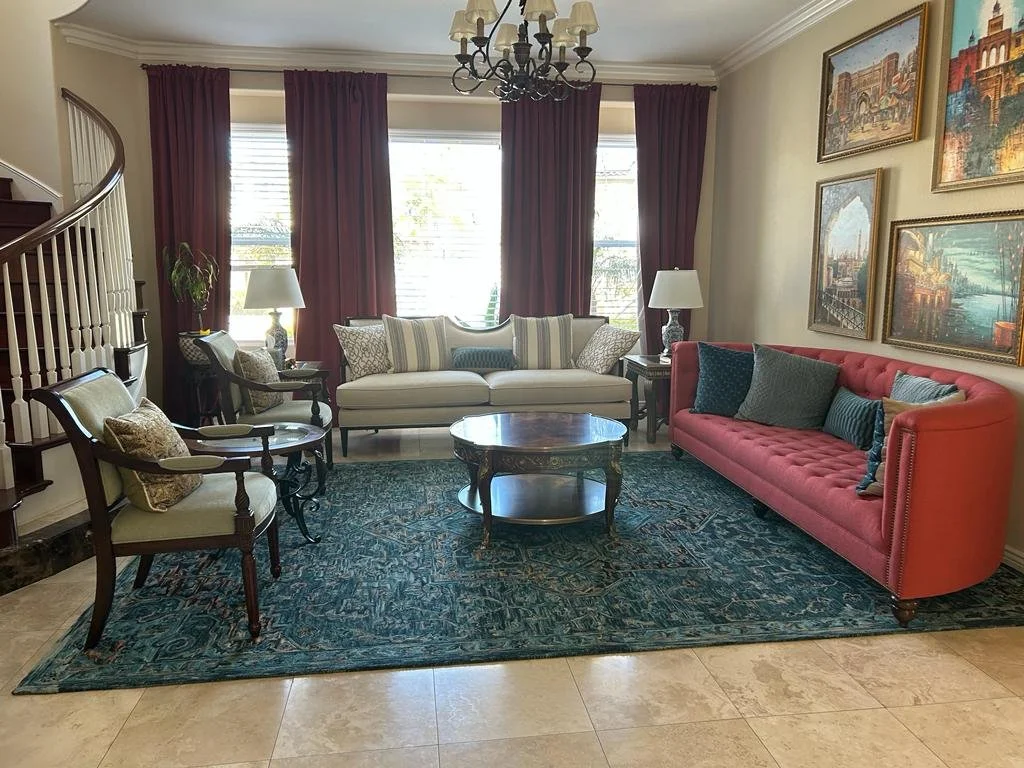
The living room became the anchor for the design narrative. Traditional armchairs were paired with a sculptural accent table featuring a clock-dial motif, subtly referencing heritage while maintaining a refined, contemporary presence.
Color played a quiet but deliberate role. Soft green upholstery echoed the tones within the rug, creating visual continuity, while a curved sofa in warm orange drew its hue from both the artwork and the floor-to-ceiling drapery. Neutral seating with tailored wood detailing grounded the room, ensuring balance and cohesion.
Artwork was selected not as decoration, but as a reflection of the clients’ cultural roots. These pieces brought authenticity and meaning to the space, allowing personal history to coexist seamlessly with classical design influences. Finishes were intentionally repeated—from art frames to the carved wood coffee table—creating a sense of continuity and quiet rhythm throughout the room.
The Dining Room: Refined, Collected, and Cohesive
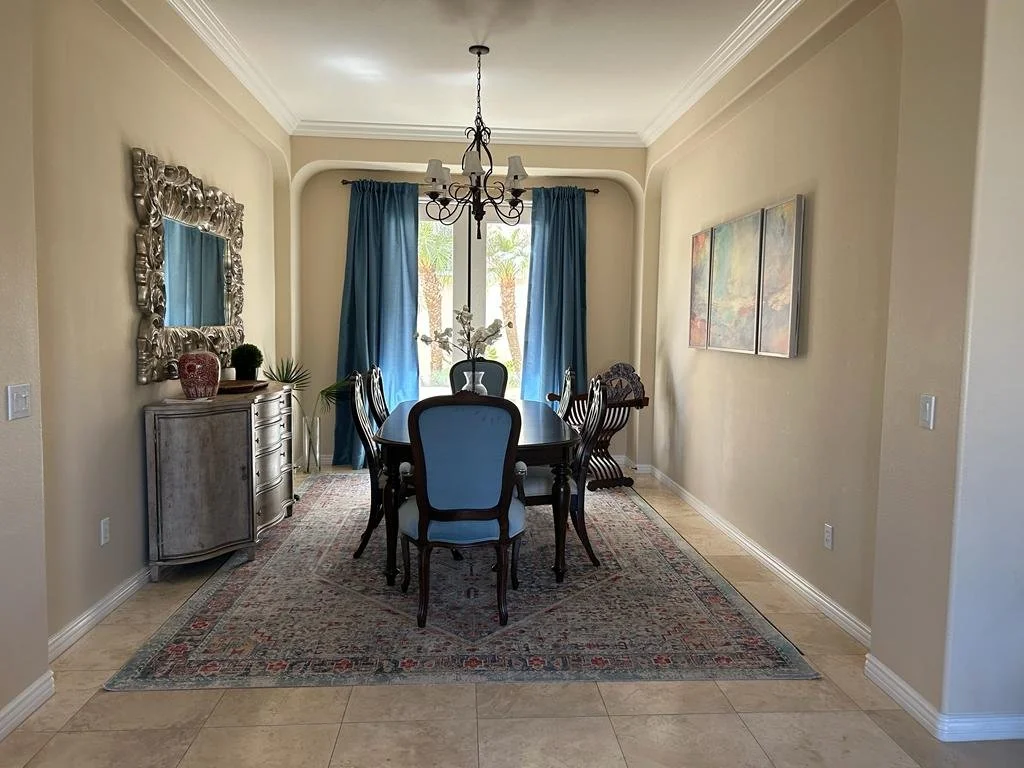
The dining room was designed to complement the living space while standing confidently on its own. The rug served as the foundation, inspiring the color palette and guiding the selection of finishes.
Custom host and hostess chairs were upholstered in performance fabric, balancing durability with elegance. Subtle cording details elevated their presence, while Queen Anne style side chairs introduced a classical counterpoint.
A sideboard in a contrasting finish added depth, while a traditionally inspired mirror—its intricate detailing echoed in the frame of the abstract artwork across the room reinforced visual cohesion without repetition.
A Design Process Built on Trust
This project was shaped by a shared vision and a high level of trust. The clients allowed the design to unfold thoughtfully, confident in a process that prioritized cohesion, intention, and long-term relevance.
That trust made it possible to push beyond expected outcomes—resulting in a home that feels layered, considered, and deeply personal.
The Result
The Moreton Glen residence is a study in thoughtful restraint. Historical influence is present but never dominant. Cultural expression is woven in with intention rather than ornament. Each space feels composed, meaningful, and designed to endure.
This is design that tells a story quietly, confidently, and with purpose.
Designing with Meaning and Intention
Great design begins with clarity, trust, and personal meaning.
If you’re drawn to spaces that feel layered, thoughtful, and deeply personal—but need guidance translating inspiration into a cohesive home a Signature Design Session offers expert direction to help define a vision that feels authentic to you.
Book a Signature Design Session
For more case studies and design insights, subscribe below.